
Elon Musk's $20 Billion Data Center Deal Is Costing Mississippi Families

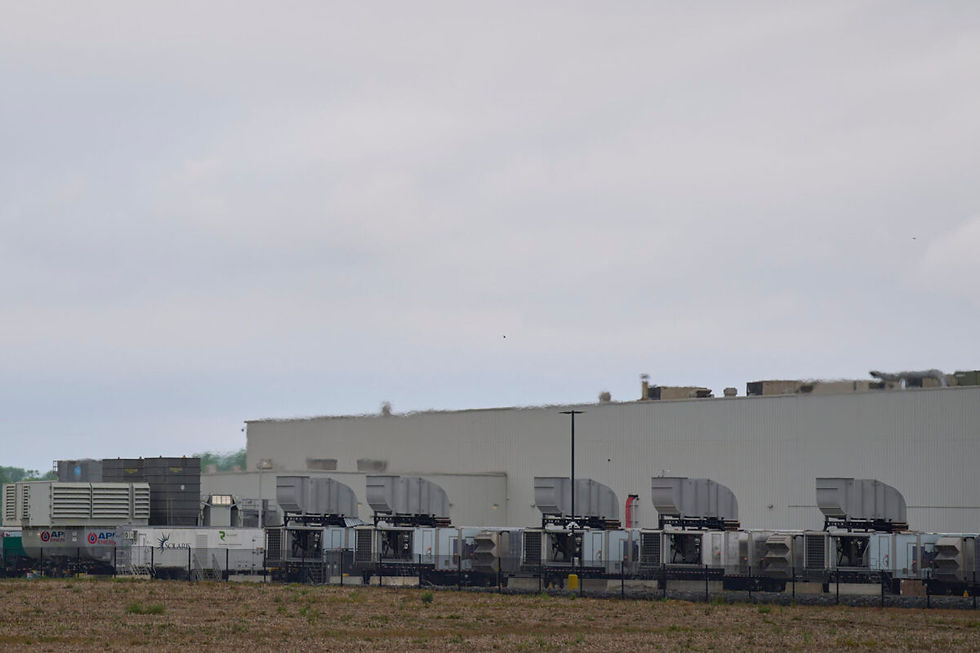
Elon Musk's xAI is spending $20 billion to build a new data center in Southaven. While state and local leaders turn a blind eye and hand him shortcuts, Mississippi families will pay the real price.
What is happening
Elon Musk owns an artificial intelligence company called xAI. It powers Grok, the chatbot on Musk's platform X that was documented creating an estimated 3 million sexualized images of women and children in just 11 days, and spreading them across the platform. Training a chatbot like Grok takes enormous buildings full of computers, called data centers, and those computers need more electricity than a small city.
Musk already runs two of these data centers in Memphis. Now he is expanding into Southaven, in DeSoto County, just across the state line. The $20 billion data center, called MACROHARDRR, is going up inside an old warehouse. To run it, xAI bought an old Duke Energy power plant and filled it with gas-burning turbines. That power plant has been running since August 2025, and it is what the neighbors have been living next to for more than a year. And last month, Southaven approved a second xAI data center on Tulane Road, on land the city had just swapped to the company.
The $20 billion data center
In January, Governor Tate Reeves stood in Southaven and announced that xAI would spend more than $20 billion turning an old warehouse into a data center called MACROHARDRR. He called it the largest investment in Mississippi history. Musk called it "insane execution speed by xAI and the state of Mississippi."
To land the deal, the state waived xAI's sales, income and franchise taxes. DeSoto County and the city of Southaven have also agreed to substantially reduce property taxes. When the second data center came up for a vote last month, the one alderman who voted no said xAI had not kept the promises it already made to the neighbors on fixing the issues with noise pollution coming from the power plant.
The rules that were skipped
In most of Mississippi, if you want to build something that burns fuel and sends smoke into the air, you need an air permit first. The permit sets limits on what you can put into the air and lets neighbors weigh in. xAI never got one to build the powerplant that has been running for over a year.
Instead, state regulators sent the company a letter saying its turbines were "temporary" and could run for a year without any permit at all. xAI said it was running 27. By July, state inspectors counted 69, enough to power 1.4 million homes, all of it running without a permit and all of it sending electricity to Musk's computers while the exhaust stays in Southaven. The NAACP is now suing xAI in federal court for violating the Clean Air Act. The state has never filed a case of its own.
The two new data centers faced even fewer rules, because almost none exist. Mississippi has no state law covering data centers. When Southaven approved the second data center, the city's planning director explained that data centers are allowed by right under industrial zoning. That means no public hearing, no limits on noise, and no limits on how much water or power the company can use.
How leaders let it happen
Southaven's leaders knew about the $20 billion data center before the public did. A city alderman signed a nondisclosure agreement before the project was announced, the first of his career. Neighbors learned the power plant was coming when the mayor announced it on Facebook, days before the noise started. Because the state labeled the turbines temporary, no public notice or town hall was required, and as the fleet grew from 18 to 69, xAI did not have to tell the state when it added more.
When xAI asked for a permit to make the power plant permanent, hundreds of people came to the hearing and not one spoke in favor. Three weeks later, the state permit board approved it unanimously, at a meeting held on election day.
When the NAACP asked a federal judge to shut the turbines off, Governor Reeves sent the court a letter defending the company, and the U.S. Justice Department stepped in on xAI's side.
When a Southaven man emailed the mayor at 4 a.m. because the noise pollution from the facility would not let him sleep, Mayor Darren Musselwhite told him xAI wanted houses for its employees, so "you may want to consider selling your home." During the same months the city was negotiating with xAI, Musk-linked groups gave the Southaven Police Department $3.23 million.
What it means for Mississippi families
The air. The power plant sits between two neighborhoods, with at least 10 schools, three daycares and 27 churches within two miles. The NAACP's court filing estimates the turbines could put out 2,508 tons of smog-forming pollution a year in a county that already gets an F for ozone from the American Lung Association. Air monitors outside one family's front door read above the EPA's daily health limit about a third of the time.
The noise. Residents describe a constant whirring like an airplane hovering over the house. One mother reports migraines, ringing in her ears and her children's, and kids who cannot stay awake at school.
The water. Engineers estimated that cooling Musk's first Memphis data center alone takes more than a million gallons of water a day, in a region where the Memphis Sand Aquifer is the drinking water supply for both Memphis and DeSoto County. xAI promised an $80 million recycling plant so it would not have to draw from the aquifer. Construction stopped in April with the plant partly built, and officials admit they never got that promise in writing. The company now says it will restart work in 2027.
The power bill. In 2024, lawmakers passed a law to fast-track data centers that let Entergy, the state's largest power company, charge customers for data center costs before the facilities even run, and kept its deal with Amazon hidden from the public. A report this spring estimates the average Entergy Mississippi customer is already paying about $10.60 more a month because of Amazon's data center projects. That is $127 a year. Entergy says bills will be lower by 2030, but it will not release the numbers to prove it, citing trade secrets. And Mississippi has seven data center projects underway across the state.
The homes. This month, Musk's company began offering to buy homes near the power plant, but only if families sign away their claims in the noise lawsuit. The mayor says the houses will go to xAI employees. Renters, who make up one-third to two-thirds of the households nearby, get nothing. Danielle Dillard, a mother of four, had just renewed her lease when her landlord took the buyout and gave her 60 days to leave. No one offered to cover her moving costs. She emailed xAI and never heard back.
Two sets of rules
Mississippi families are getting shorted. They are living with the noise, breathing the exhaust, watching their power bills climb and, in some cases, being pushed out of their homes. None of them asked for this, and none of them were given a say.
While the richest man in the world gets tax breaks and projects approved without a hearing or any regulation, Missisippians are paying the price.


Comments